
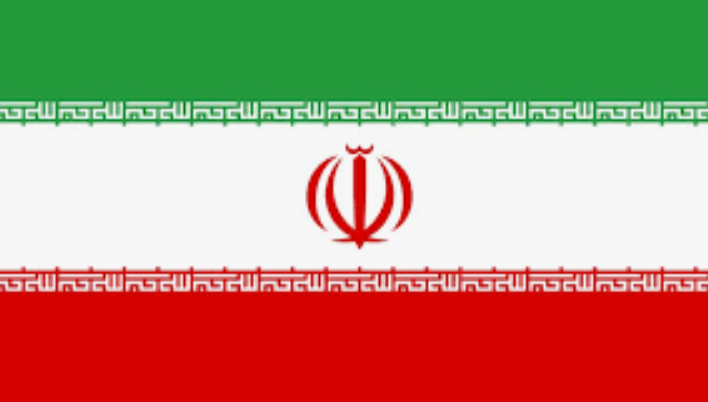
If you’re an American of a certain age—did you ever think you’d see the United States lose four wars in your lifetime—Vietnam, Iraq, Afghanistan and now Iran? For most of my 15 years in the US Foreign Service, I planned or participated in America’s wars. By far the most important lessons I learned were ones we rarely applied: the importance of knowing what the hell you’re doing and why, and having a smart plan that gave you a strong possibility of coming out of the war in better shape than when you went in.
Donald Trump has fired anyone who might give him that advice and he would ignore it if he got it. But while public approval of his war in Iran continues to tank, plenty of Americans still buy his ignorance, incompetence and lies. That needs to change.
Iran didn’t start this war—we did, when we removed Iran’s legitimate ruler in 1953 (a man whose oil politics were too independent for our liking). We replaced him with a corrupt autocrat who quickly earned the hostility of most of his people. He in turn was kicked out by a popular uprising which invited in a government of religious fanatics in 1979—a government that never forgave us for what we did in 1953. “Death to America” has been the rallying cry of the Iranian government and a good many of the Iranian people ever since.
But what’s going on now flows from more than a grudge. The mullahs who run Iran pose real dangers to the region and to the world. For decades, they’ve been patiently assembling the materials and skills needed to create a nuclear weapon. They support and arm proxies like Hamas, Hezbollah and the Houthis, who are responsible for most of the terrorist attacks in the Middle East—and especially those directed at Israel. So Trump is right on one point: Iran is not a friend.
Trump’s predecessors have tried to deal with Iran through diplomacy, including forging a treaty in 2016 that limited Iran’s ability to enrich uranium to weapons grade for a period of 10 years in return for easing American economic sanctions against the country. Trump took the US out of that treaty on his first day in office, foolishly betting that threats were more potent than diplomacy. The Iranians—who are no fools—called his bluff and quickly accelerated their pace in building a nuclear weapon.
So Donald Trump, egged on by bad advice from his Israeli partners, attacked. The first assault was directed last June at Iran’s nuclear facilities, and it left a lot of them in rubble, but by no means all, and Iran did not surrender. In February, the US and Israel launched the current war with minimal thought as to its strategy, tactics or consequences. Trump really thought that Iran would be another Venezuela—where we grabbed the top guy in a midnight raid and threw him into a courtroom in New York. In and out, mission accomplished.
Iran is not Venezuela.
Iranians are a proud, strong, educated people with a rich culture and history. Iranians are descendants of the mighty Persian empire, which controlled this part of the world on and off for the last 6,000 years. Now, they are a proud and savvy nation, also very good at making drones and missiles and who pose a vastly greater military threat than Venezuela.
What “planning” Trump is capable of seems limited to blowing stuff up. His war has achieved none of the shifting collection of objectives that his administration has offered from the beginning.
Yes, it further set back Iranian nuclear ambitions, but experts agree that Iran still has almost 1,000 pounds of uranium enriched to almost weapons grade, hidden so deep underground that only a land invasion could seize it.
Yes, US and Israeli forces killed off many top Iranian leaders, but it’s now clear that Iran’s new leaders are if anything more competent and more anti-American than the ones Trump and Netanyahu killed.
Yes, US bombing took out the greater part of Iran ‘s drone and missile-making capacity and launch sites. But these Iranian weapons are relatively simple and cheap to make and it’s clear from new satellite photography that remaining Iranian drones and missiles since February have done huge amounts of damage to very expensive American military installations and war fighting equipment in the region, crippling many of these installations and undermining American capacity for the intelligence-gathering that allows accurate targeting.
The Israelis apparently convinced Trump that air attacks would motivate the Iranian people to rise up against their own rulers. That belief was incredibly stupid. Many Iranians may hate their own government, but they hate the United States and Israel a lot more. Bombing does that to people—especially when bombs kill schoolchildren.
While American and Israeli attacks have focused the Iranians on their own defense, it’s also clear that these assaults have at best only interrupted Iranian support for attacks by their proxies against Israel and against Gulf states who aid the United States.
The White House continues to lowball the cost of its war, which by most independent estimates is far more than the $25 billion of taxpayer money announced by the White House. That’s only the cost of war-fighting equipment and ammunition. It does not include the billions of dollars of damage done to American facilities so far, nor the vastly greater costs to the US and to the world caused by the Iranian blockade of global oil supplies.
This war is what the military call “asymmetric,” that is a stronger power is forced to spend far more in launching attacks than a smaller weaker power must spend in defending against them and counterattacking. Lexington and Concord come to mind. The Iranians can make a drone for $50,000 to destroy airplanes and radar facilities worth millions. A sophisticated US Patriot missile fired to shoot down a cheap Iranian missile or drone costs $4 million. You do the math. Each of the three American aircraft carriers now stationed in the area costs $8 million a day just to run.
The White House has also not admitted that in six weeks of war the United States has used up a third to half of the inventory of its very high-priced drones and missiles, depleting stocks meant for other potential battlefields, including a possible defense of Taiwan.
Donald Trump’s seat-of-the pants warmaking also completely neglected three crucial factors that any competent military planner could foresee.
First, Trump did not anticipate that Iran would dare launch attacks on any neighbors in the Gulf who supported the American war effort. But Iran has done just that, crippling some oil and gas facilities in Saudi Arabia, the UAE and Qatar as a means of further adding to the crisis in global oil supplies.
Second, the two real winners in this war are China and Russia, who must be delighted to see the US weakened and humiliated by a minor power. Sanctions against Russian oil have been lifted as the price soars. It’s an enormous boon to the Russian economy, which has been struggling to meet the costs of its invasion of Ukraine.
But the crowning piece of Trump’s idiocy was to not anticipate that, if attacked, Iran’s first move would be to block the Strait of Hormuz, a narrow channel through which ships must pass carrying 20% of the world’s oil and natural gas to world markets. By-products of that oil are also crucial to global agriculture and to many industrial uses.
Iran owns the entire eastern shore of the Strait, which is only 20 miles across at its narrowest point. They don’t even have to fire a shot to block it. Simply threatening to attack tankers in the Strait is enough to discourage shipping companies and their insurers from risking running the Iranian blockade. If the Iranians chose to use force, they don’t need much; a fishing boat loaded with high explosives and driven one dark night into the side of a tanker would be enough to cripple the tanker and perhaps also any American warship assigned to protect it. The Iranians could also mine the Strait just about any time they chose, knowing that the United States doesn’t have nearly enough minesweeping equipment to find them all.
There are two options for Trump for opening the Strait: he can invade Iran’s side of the Strait, which would be the start of a land war. Boots on the ground. Something he promised never to do. The American people would not stomach another Afghanistan, and even Congress might finally find the guts to stop him.
That leaves negotiations. Perhaps finally understanding that the war he started last February is not working, Trump has offered a ceasefire which has diminished but not stopped the fighting. A US blockade of Iranian ports is certainly causing the Iranians pain, which Trump hopes will force them to accept his demands for ending the war on his terms.
That’s not going to happen; time is on the Iranian side. Like the North Vietnamese before them, the Iranians can suffer a lot of pain knowing that all they have to do is outlast the Americans. Domestic pressures created by the November US elections as well as global economic pressures created by the oil blockade will only intensify. And if a negotiated settlement is reached, it will almost certainly give the Iranians much of what they want. They will never, for example, give up their nuclear ambitions. And now that they appreciate the enormous influence they wield over the global economy because of their chokehold on Hormuz, they are never going to give up that power either. Donald Trump has single-handedly transformed Iran from a regional power into a global power and the Iranians have got to be delighted.
What can you do? Stay informed of these fast-moving events and make sure your friends and neighbors are also energized. Apply political pressure on the Trump administration any way you can, from street demonstrations to hammering your Congress members.
My advice to Donald Trump: declare victory and get out. The world will know what really happened.